
Search
Population-level, nationally representative data on the prevalence of minority stressors and traumatic events, mental ill-health effects, and the preventative utility of school climate, among gender and sexuality diverse young people in Australia, is significantly lacking.
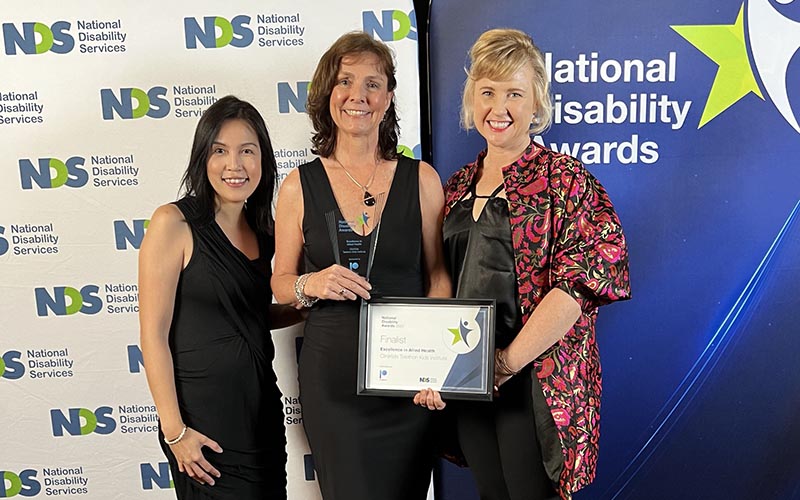
CliniKids has won the Excellence in Allied Health category at the inaugural National Disability Awards, announced in Melbourne tonight.
The health and well-being of transgender, non-binary, and gender-diverse people is receiving increasing attention from epidemiologists and public health researchers, including those utilizing longitudinal observational cohort studies.
Acute rheumatic fever (ARF), a serious inflammatory condition, often leads to rheumatic heart disease. Between 2011 and 2016, Aotearoa New Zealand implemented a rheumatic fever prevention programme to reduce high rates of ARF through improved community access to timely diagnosis and early treatment of group A streptococcal pharyngitis, which has been shown to prevent subsequent ARF.
The global invasive meningococcal disease (IMD) landscape changed considerably during the COVID-19 pandemic, as evidenced by decreased incidence rates due to COVID-19 mitigation measures, such as limited social contact, physical distancing, mask wearing, and hand washing. Vaccination rates were also lower during the pandemic relative to pre-pandemic levels.
A child's cancer diagnosis has a significant impact on the lives of grandparents. Grandparents experience the stress of worrying about both their adult children and their grandchildren. Our study aimed to explore the lived experience of grandparents of children diagnosed with cancer.

By mutual agreement with the Channel 7 Telethon Trust (Telethon), The Kids Research Institute Australia and Telethon Speech and Hearing will both rebrand in 2024.
Food allergy is a major public health challenge in Australia. Despite widespread uptake of infant feeding and allergy prevention guidelines the incidence of peanut allergy in infants has not fallen, and prevalence of peanut allergy in school-aged children continues to rise. Therefore, effective and accessible treatments for peanut allergy are required.
Patients who exhibit high systemic inflammation after cardiac surgery may benefit most from pre-emptive anti-inflammatory treatments. In this secondary analysis of the randomised, double-blind Intraoperative High-Dose Dexamethasone for Cardiac Surgery trial, we set out to develop an inflammation risk prediction model and assess whether patients at higher risk benefit from a single intraoperative dose of dexamethasone.
The Perth Empathy Scale (PES) is a 20-item self-report questionnaire that assesses people's ability to recognize emotions in others (i.e., cognitive empathy) and vicariously experience other's emotions (i.e., affective empathy), across positive and negative emotions. Originally developed in English, the aim of our study was to introduce the first Polish version of the PES and test its psychometric performance.