
Search
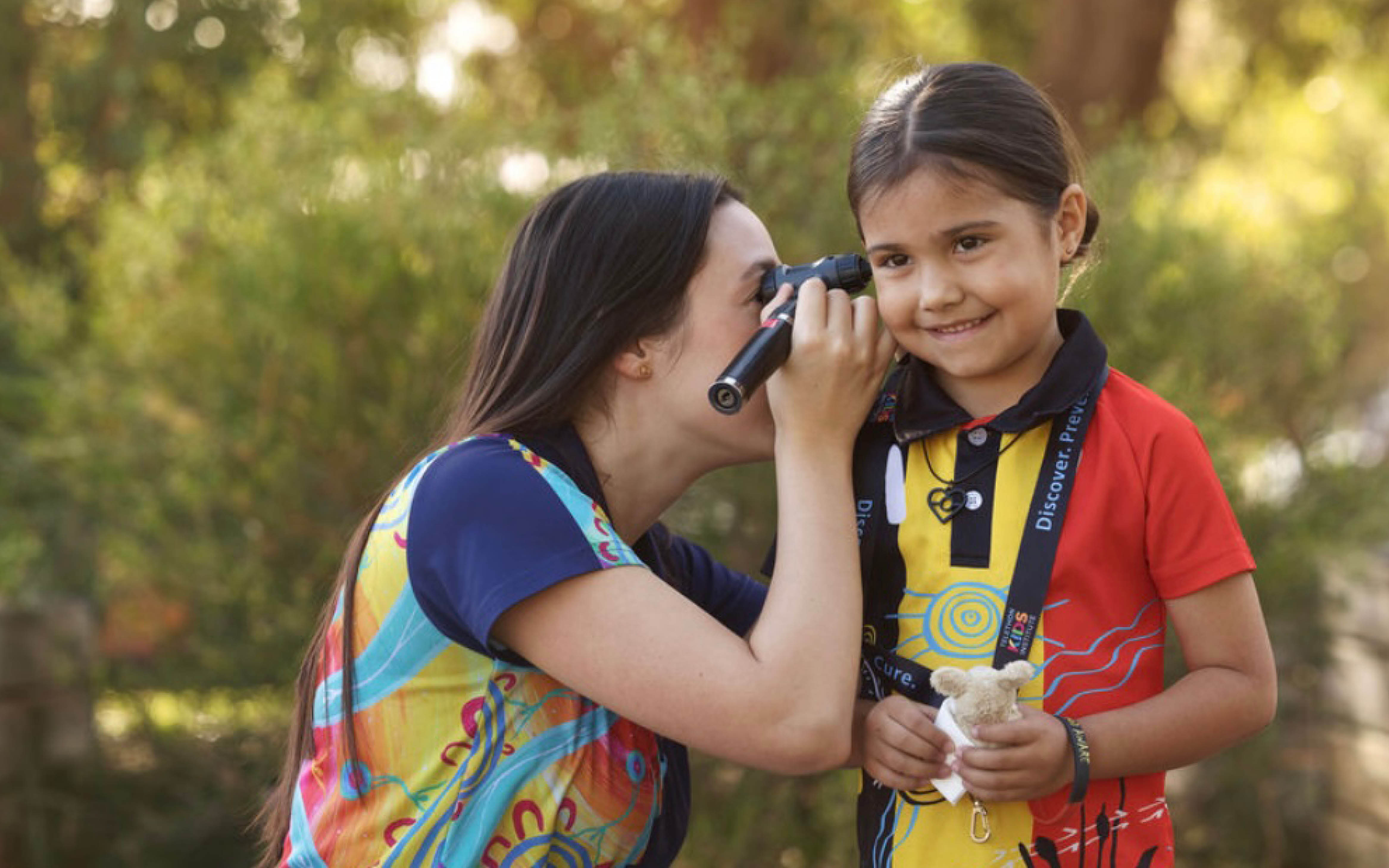
The Ear and Hearing Health team's vision is all children start primary school with good hearing.
Children who are Deaf and Hard of Hearing, their parents, Teachers of the Deaf, and other community stakeholders were involved in co-designing a web-based resource to support students' social-emotional well-being.
Regular physical activity is important for children's physical and mental health, yet many children do not achieve recommended amounts of physical activity. Dog ownership has been associated with increased physical activity in children, however, there have been no longitudinal studies examining this relationship.
To investigate associations between interpregnancy intervals (IPIs) and adverse birth outcomes in twin pregnancies.
Serotype 24F is one of the emerging pneumococcal serotypes after the introduction of pneumococcal conjugate vaccine (PCV). We aimed to identify lineages driving the increase of serotype 24F in France and place these findings into a global context.
Outdoor play in the home yard is an important source of physical activity for many preschoolers. This study investigated if home yard size and vegetation are related to preschooler outdoor play time.
Streptococcus pneumoniae is a key contributor to childhood morbidity and mortality in Papua New Guinea (PNG). For the first time, whole genome sequencing of 174 isolates has enabled detailed characterisation of diverse S. pneumoniae causing invasive disease in young children in PNG, 1989-2014.
Dog ownership is a potential strategy for maintaining physical activity levels and supporting healthy aging. This study examined longitudinal effects of dog ownership and dog walking on physical activity and mental health in mid-to-older aged adults.
Contemporary data for the global burden of sore throat and group A Streptococcus (Strep A) pharyngitis are required to understand the frequency of disease and develop value propositions for Strep A vaccines.
Chris Deborah Tamara Brennan-Jones Lehmann Veselinovic PhD AO, MBBS, MSc BSc(Hons) MClinAud PhD Head, Ear and Hearing Health Honorary Emeritus Fellow
The observed decline in children's active school transport (AST) across numerous countries over recent decades necessitates targeted, multi-level interventions to reverse this trend. However, data on young people's preferred AST interventions is lacking. This study aimed to explore children's preferences for AST interventions and assess differences between AST users and non-users among primary and secondary school students.
Research suggests there is considerable opportunity to improve children's movement behaviors while they are being cared for by their grandparents. An understanding of the extent to which grandparent practices facilitate children's engagement in physical activity is critical to the development of health interventions targeting grandparent caregivers.
Invasive meningococcal disease (IMD) causes significant morbidity and mortality worldwide with serogroup B being the predominant serogroup in Australia and other countries for the past few decades. The licensed 4CMenB vaccine is effective in preventing meningococcal B disease. Emerging evidence suggests that although 4CMenB impact on carriage is limited, it may be effective against gonorrhoea due to genetic similarities between Neisseria meningitidis and Neisseria gonorrhoeae.
Childcare services such as preschools and long day care centres have been identified as a key setting to promote physical activity in early childhood as they provide access to large numbers of children for prolonged periods. Yet, specific standards for the type and amount of physical activity children accumulate whilst attending childcare are lacking. The purpose of this study was to derive population-referenced percentile values for children's total movement and energetic play whilst attending early childhood education and care services.
Citation: Reid A, Bowen AC, Brennan-Jones CG, Kuthubutheen JB. Congenital cytomegalovirus: the case for targeted infant screening in Australia. Med J
Knowledge of developmental trends in meeting age-specific 24-hour movement behaviour guidelines is lacking. This study describes developmental trends in device-measured physical activity and sedentary time over a three-year period among Western Australian children aged two to seven years, including differences between boys and girls.
BCG vaccination modulates immune responses to unrelated pathogens. This off-target effect could reduce the impact of emerging pathogens. As a readily available, inexpensive intervention that has a well-established safety profile, BCG is a good candidate for protecting healthcare workers (HCWs) and other vulnerable groups against COVID-19.
Papua New Guinea (PNG) introduced the 13-valent pneumococcal conjugate vaccine (PCV13) in 2014, with administration at 1, 2, and 3 months of age. PCV13 has reduced or eliminated carriage of vaccine types in populations with low pneumococcal carriage prevalence, carriage density and serotype diversity.
With an increasing number of grandparents providing care to their grandchildren, calls have been made for these caregivers to be considered important stakeholders in encouraging children's engagement in health-promoting behaviors, such as physical activity.
Natural outdoor environments provide important settings for children to engage in physical activity. It is unclear if these relationships also exist in preschool aged children. We examined associations between amount and type of neighbourhood vegetation and blue space, proximity to the beach and preschooler's device-measured movement behaviours.