
Search
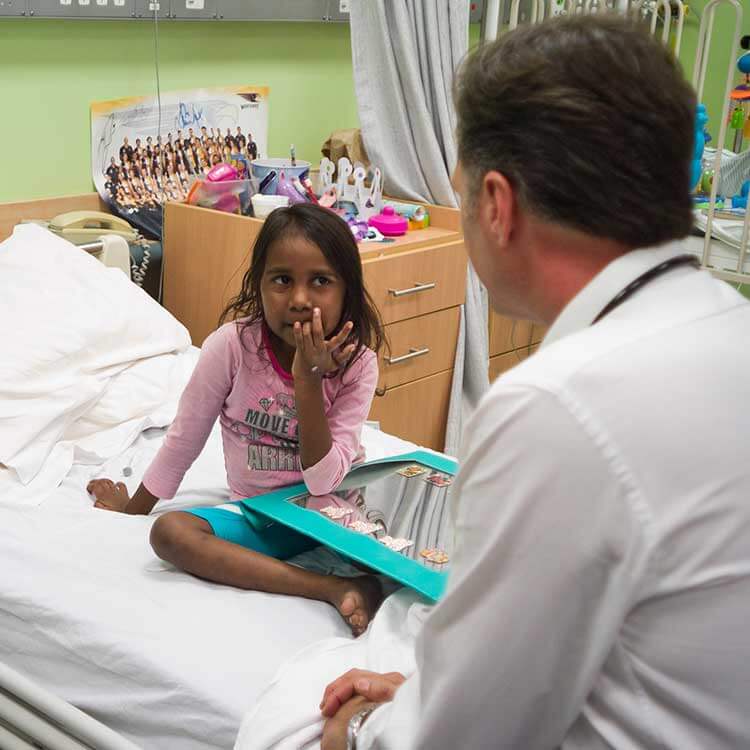
Some of the nation’s leading medical researchers will converge on Darwin this week to step out a plan to wipe out rheumatic heart disease.

At what age does your child have the mental capacity to cross the road alone? Our researchers have the answer and it's older than you might think.

Teaching a class of year eleven students about nutrition ten years ago is what gave Dr Gina Trapp the idea for her research.
This research explored adults' perceptions of how sexualized images typically found on social media might influence adolescent girls' mental health, what support girls might need should they experience mental health difficulties, and how such difficulties could be prevented or reduced.
Fetal Alcohol Spectrum Disorder (FASD) is characterised by a range of neurodevelopmental deficits that may increase risks of justice system involvement. Improving our understanding of criminogenic risk factors and particularly the role of informant-rated executive functioning (EF) in predicting the age of offending onset in this clinical population may reduce recidivism and help inform targeted interventions.
Children who are Deaf and Hard of Hearing, their parents, Teachers of the Deaf, and other community stakeholders were involved in co-designing a web-based resource to support students' social-emotional well-being.
School toilets have been identified by sexuality and gender diverse (SGD) students as the least safe spaces in educational institutions. They are sites of verbal, physical and sexual victimisation.
The prevalence of bullying worldwide is high (UNESCO, 2018). Over the past decades, many anti-bullying interventions have been developed to remediate this problem. However, we lack insight into for whom these interventions work and what individual intervention components drive the total intervention effects.
Bullying is an issue that continues to represent a significant challenge to the provision of pastoral care in schools. In more recent decades, it has evolved in its complexity to include forms of bullying often referred to as cyberbullying or online bullying.
This study aimed to estimate the prevalence of different forms of bullying victimization experiences and their association with family functioning, peer relationships and school connectedness among adolescents across 40 lower and middle income to high-income countries (LMIC-HICs).