
Search

Congratulations to trailblazing mental health researcher Professor Helen Milroy, who has been announced as a finalist for the 2021 Human Rights Medal.
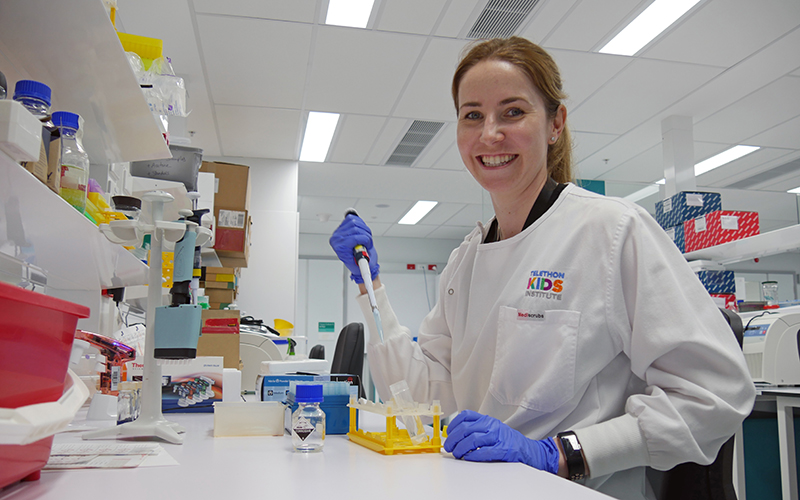
The Kids Research Institute Australia researchers will seek to better understand the relationship between antibodies and inflammation in people with multiple sclerosis (MS), thanks to a generous grant from MS Research Australia.

Bushfires can have a considerable impact on our physical and mental health, with some symptoms lasting long after the blaze is extinguished. And our children are amongst the most vulnerable.

Secondary students have the opportunity to hear from Associate Professor Asha Bowen, a 2018 L’Oreal-UNESCO Women in Science Fellow, in a free online event this National Science Week.

Perth’s The Kids Research Institute Australia has welcomed a major funding boost for the Medical Research Future Fund (MRFF).
Fiona Stanley FAA FASSA MSc MD FFPHM FAFPHM FRACP FRANZCOG HonDSc HonDUniv HonFRACGP HonMD HonFRCPCH HonLLB (honoris causa) Patron 08 6319 1176
We examined the human toll and subsequent humanitarian crisis resulting from the Russian invasion of Ukraine, which began on 24 February 2022.
Online youth-focused health programs often include parent modules—that equip parents with skills to assist their child in improving their health—alongside youth-specific content. BRAVE Self-Help, an evidence-based program designed for children and teenagers with early signs of anxiety, is a popular Australian program that includes six parent modules.
Leclercia adecarboxylata is a rare cause of septic arthritis in children, and has intrinsic resistance to common antibiotics. We describe two cases of L. adecarboxylata septic arthritis in children that required re-presentation to hospital with prolonged treatment, and highlight the importance of considering L. adecarboxylata as a potential cause of infection among children with penetrating injuries and associated environmental exposure.
Antisense oligonucleotides are an emerging therapeutic option to treat diseases with known genetic origin. In the age of personalised medicines, antisense oligonucleotides can sometimes be designed to target and bypass or overcome a patient's genetic mutation, in particular those lesions that compromise normal pre-mRNA processing. Antisense oligonucleotides can alter gene expression through a variety of mechanisms as determined by the chemistry and antisense oligomer design.