Skip to content
The Kids Research Institute Australia logo
Donate

Search

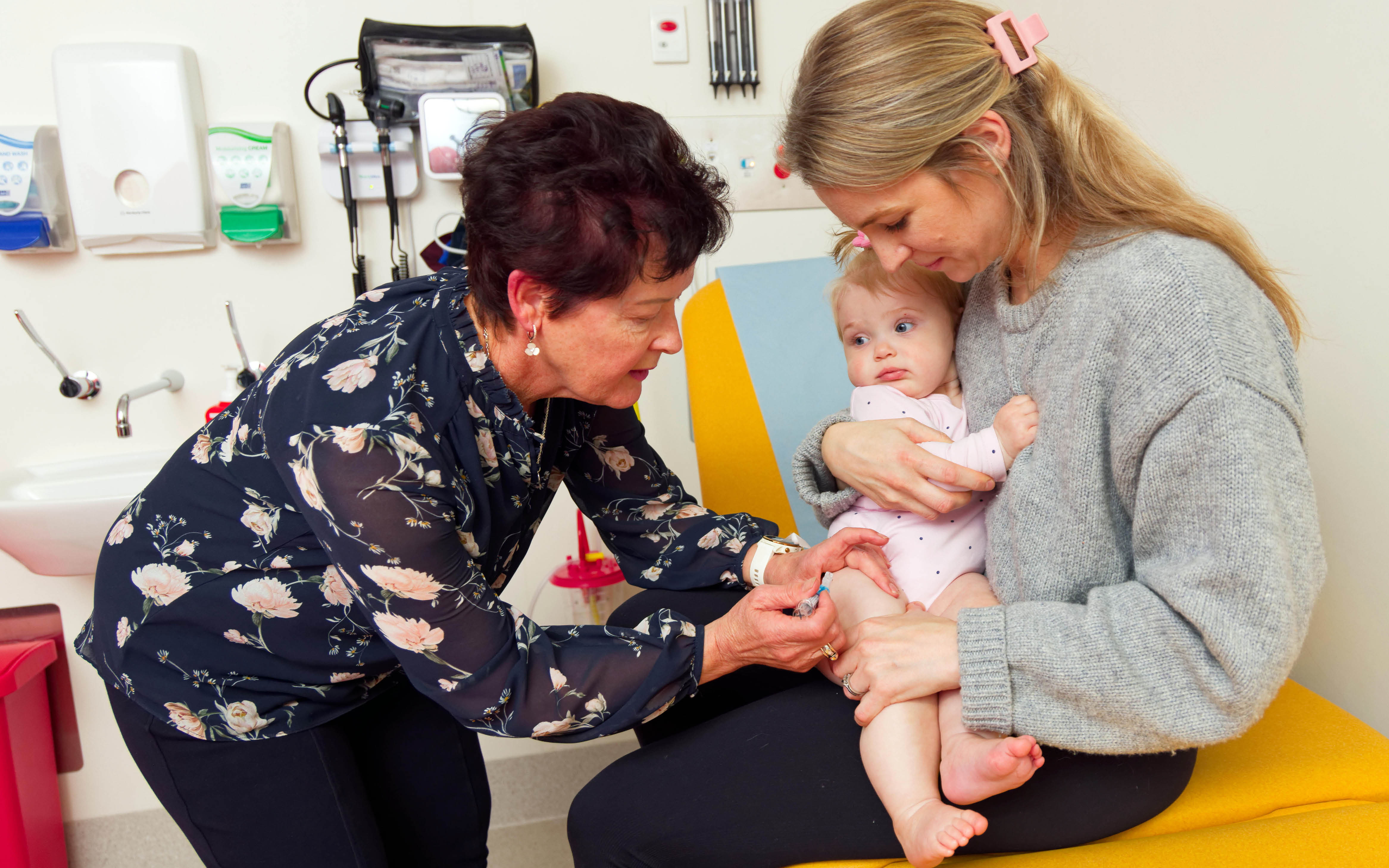
Safety and Immunogenicity of Early Quadrivalent Influenza Vaccine: A phase 2prospective randomised open-label feasibility study (FluBub)

Christopher Peter Blyth Richmond MBBS (Hons) DCH FRACP FRCPA PhD MBBS MRCP(UK) FRACP Centre Head, Wesfarmers Centre of Vaccines and Infectious

Hospital admissions for skin infections among Western Australian children and adolescents from 1996 to 2012

The objective of this study was to describe the occurrence of skin infection associated hospitalizations in children born in Western Australia (WA).

Dedicated paediatric Outpatient Parenteral Antimicrobial Therapy medical support: a pre-post observational study

The introduction of a formal medical team to Hospital in the Home (HiTH) demonstrated a positive clinical impact on Parenteral Antimicrobial Therapy (OPAT) patients' outcomes.

Who is at risk of a respiratory syncytial virus hospitalisation? A linked, population-based birth cohort analysis in children aged less than 5 years

Respiratory syncytial virus (RSV) is a major cause of acute lower respiratory infections globally in children under five years. With the development of RSV prevention strategies, understanding risk factors and relation to age and population is useful for deciding the type of program implemented.

Predicting regional and temporal incidence of RSV and influenza hospitalizations in a birth cohort of young Australian children

Western Australia experiences multiple climatic zones, influencing the epidemiology of respiratory viruses. We aimed to estimate the true incidence of respiratory syncytial virus and influenza hospitalizations across these different climatic regions using predictive modelling.

Clinical predictors of hypoxic pneumonia in children from the Eastern Highlands Province, Papua New Guinea: secondary analysis of two prospective observational studies

Pneumonia is the leading cause of death in young children globally and is prevalent in the Papua New Guinea highlands. We investigated clinical predictors of hypoxic pneumonia to inform local treatment guidelines in this resource-limited setting.

An infant mouse model of influenza-driven nontypeable Haemophilus influenzae colonization and acute otitis media suitable for preclinical testing of novel therapies

Nontypeable Haemophilus influenzae (NTHi) is a major otitis media (OM) pathogen, with colonization a prerequisite for disease development. Most acute OM is in children <5 years old, with recurrent and chronic OM impacting hearing and learning. Therapies to prevent NTHi colonization and/or disease are needed, especially for young children. Respiratory viruses are implicated in driving the development of bacterial OM in children.

Pneumococcal conjugate vaccine primes mucosal immune responses to pneumococcal polysaccharide vaccine booster in Papua New Guinean children

Invasive pneumococcal disease remains a major cause of hospitalization and death in Papua New Guinean (PNG) children. We assessed mucosal IgA and IgG responses in PNG infants vaccinated with pneumococcal conjugate vaccine (PCV) followed by a pneumococcal polysaccharide vaccine (PPV) booster.

Statistical considerations for the platform trial in COVID-19 vaccine priming and boosting

The Platform trial In COVID-19 priming and BOOsting (PICOBOO) is a multi-site, adaptive platform trial designed to generate evidence of the immunogenicity, reactogenicity, and cross-protection of different booster vaccination strategies against severe acute respiratory syndrome coronavirus 2 and its variants, specific for the Australian context.