
Search

Two projects led by The Kids Research Institute Australia have been awarded more than $2.5 million to fund innovative ideas focused, respectively, on combating persistent ear infections and investigating how dangerous fungi invade the bodies of immunocompromised people.
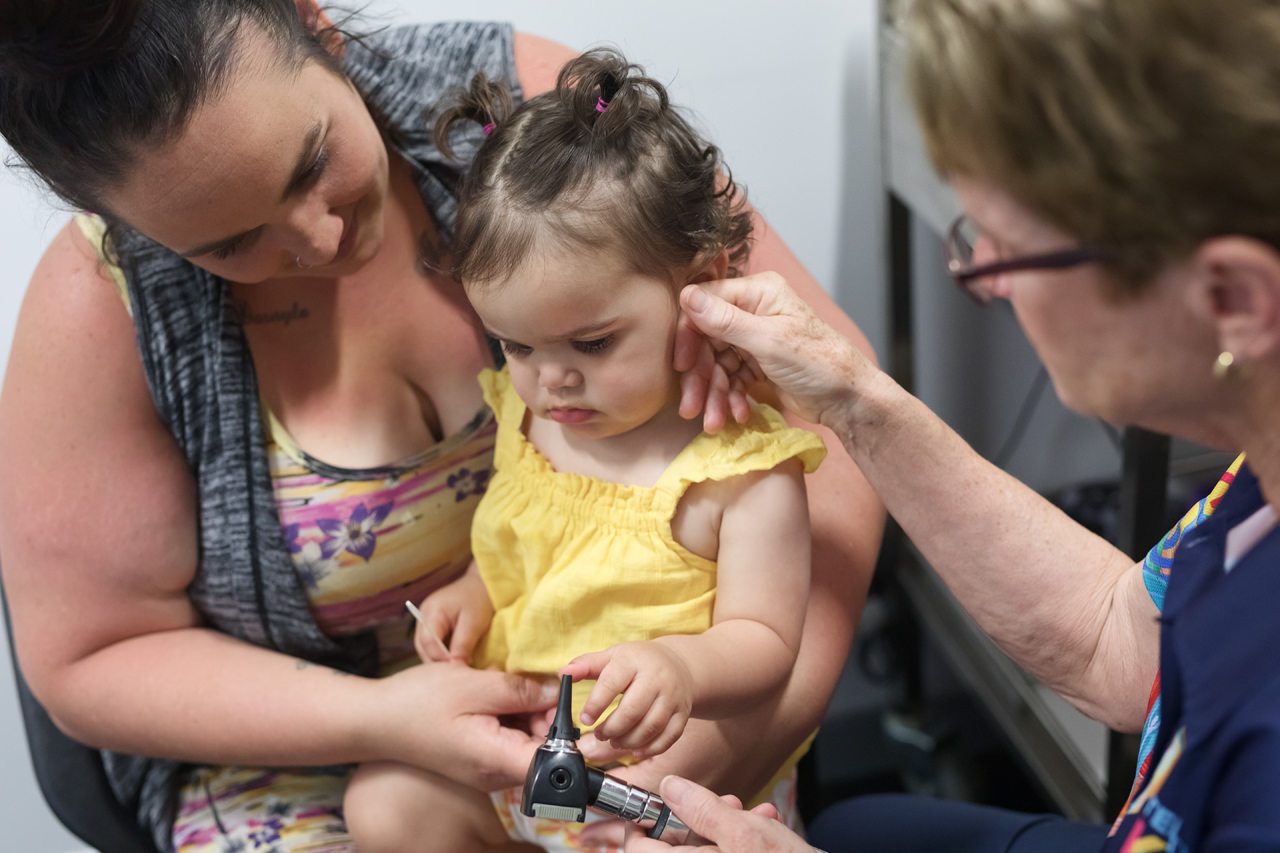
Researchers from The Kids Research Institute Australia have been awarded a $1.1 million NHMRC ‘Targeted Call for Hearing Health’ grant to conduct the first ever study following Aboriginal babies from birth through to five years to uncover the true prevalence of middle ear infections and hearing loss.

Research projects sharing in a $2.1 million funding boost will seek to translate research findings into changes that benefit patients and help the health system run more efficiently.

Two The Kids Research Institute Australia research teams have been awarded more than $3.5 million to fund innovative projects.

Check out our top tips for travelling with an ear infection so that the kids can fly safely and hit the pool in no time.

Researchers have found kids who experience repeat ear infections in infancy have a much higher risk of ongoing problems with ear infections in later childhood
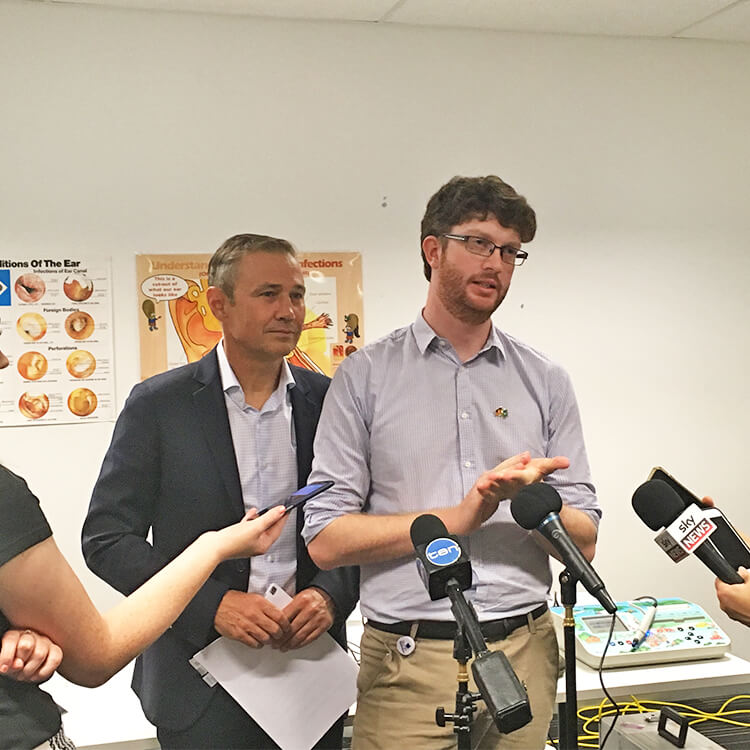
Wait times for Aboriginal children suffering ear infections could be reduced to less than four weeks thanks to a new The Kids Research Institute Australia research project

Consumers and community members are invited to join us to provide input into our childhood infectious diseases research.
In remote communities of northern Australia, First Nations children with hearing loss are disproportionately at risk of poor school readiness and performance compared to their peers with no hearing loss. The aim of this trial is to prevent early childhood persisting otitis media (OM), associated hearing loss and developmental delay.
Children with otitis media (OM) experience long waiting times to access Australia's public hospitals due to limited capacity. The aim of this article is to utilize an Ear, Nose, and Throat (ENT) telehealth service (the Ear Portal) to examine whether delayed access to specialist care is associated with poorer behavioral outcomes for children with OM.