
Search
The Repetitive Behaviours Questionnaire for Adults (RBQ-2A) measures two factors of restricted and repetitive behaviours (RRBs) associated with autism. However, the Diagnostic and Statistical Manual of Mental Disorders (DSM-5) provides four criteria for RRBs: repetitive motor behaviours, insistence on sameness, restricted interests, and interest in sensory aspects of the environment (or atypical sensitivity).
The importance of supporting parent-child interactions has been noted in the context of prodromal autism, but little consideration has been given to the possible contributing role of parental characteristics, such as psychological distress. This cross-sectional study tested models in which parent-child interaction variables mediated relations between parent characteristics and child autistic behaviour in a sample of families whose infant demonstrated early signs of autism.
The aim of this research note is to encourage child language researchers and clinicians to give careful consideration to the use of domain-specific tests as a proxy for language; particularly in the context of large-scale studies and for the identification of language disorder in clinical practice.
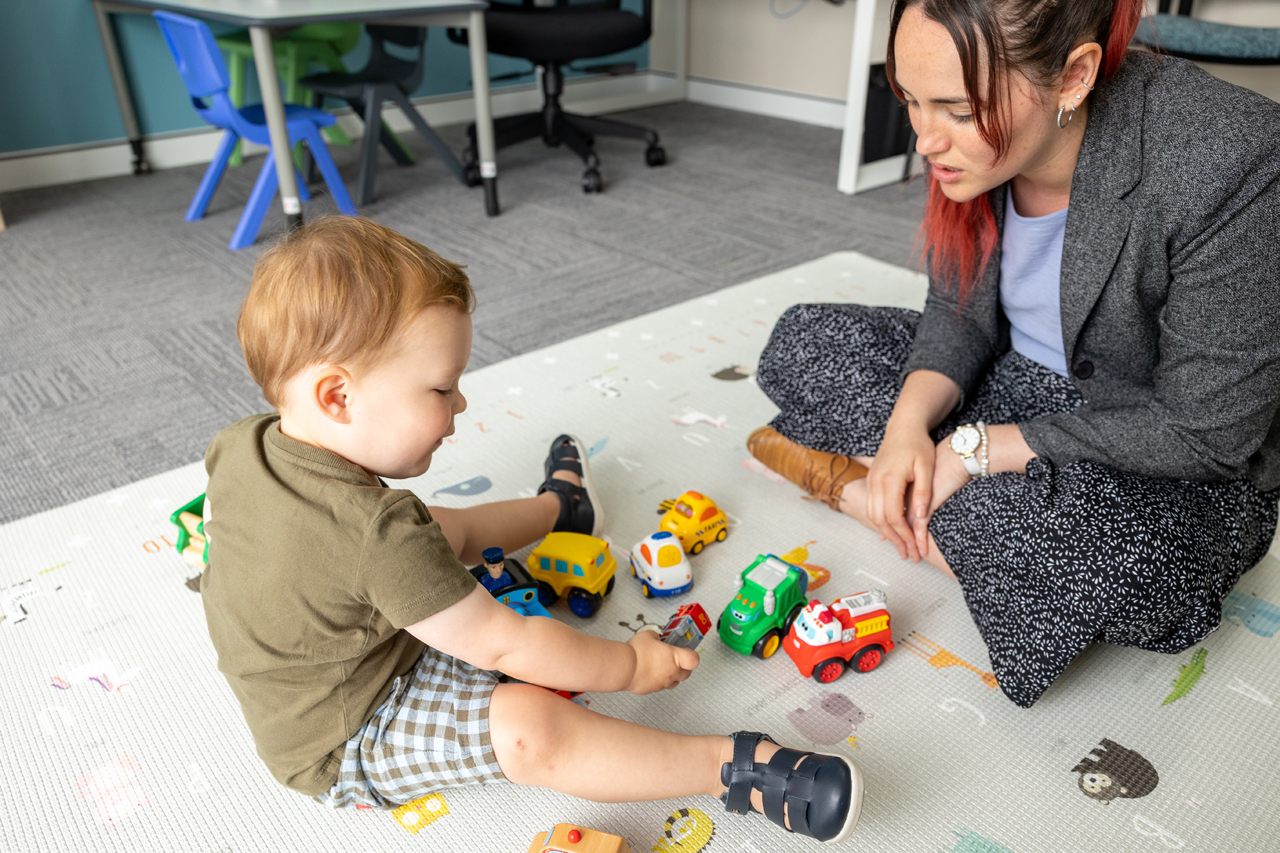
In this new blog, Speech Pathologist Emma Corry looks at the importance of shared attention for connection, communication and learning.
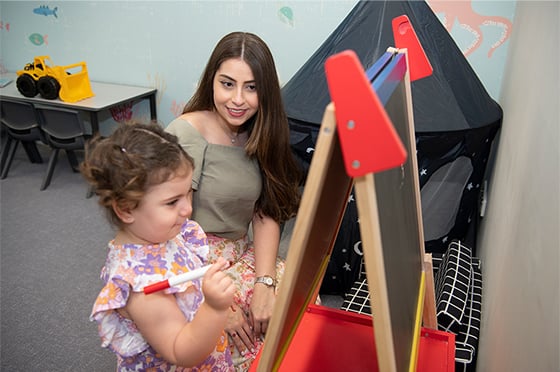
Senior Speech Pathologist Marisa Di Lorenzo looks at social communication and language outcomes for bilingual autistic children.

Senior Speech Pathologist Sally Grauaug looks at how to build the foundations of communication with your child.
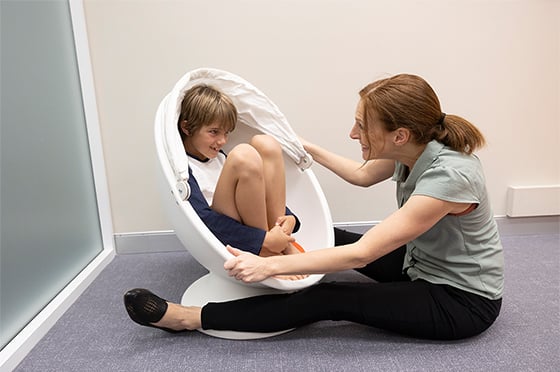
In this blog, Speech Pathology Lead Aria May explores how to talk to your child about a recent autism diagnosis.

In this new blog, Speech Pathology Lead Aria May looks at the importance of Autism Acceptance Month and what you can do to move towards a truly inclusive community.

In this blog, Occupational Therapy Lead Marie Rodatz looks at the strategies to support a great school holiday outing for your autistic child.

In this blog, CliniKids Director Professor Andrew Whitehouse and Research Development Manager Sarah Pillar explore one of the most common questions when it comes to support for autistic children - how much is the right amount of therapy?