
Search
Nick Rishi S. Laurence Sung Gottardo Kotecha Cheung Chiu MBChB FRACP PhD MB ChB (Hons) MRCPCH FRACP PhD BPharm (Hons) MBA PhD MBBS FRACP FRCPA PhD
Respiratory syncytial virus (RSV) is a major cause of acute lower respiratory infections globally in children under five years. With the development of RSV prevention strategies, understanding risk factors and relation to age and population is useful for deciding the type of program implemented.
Western Australia experiences multiple climatic zones, influencing the epidemiology of respiratory viruses. We aimed to estimate the true incidence of respiratory syncytial virus and influenza hospitalizations across these different climatic regions using predictive modelling.
Globally, acute respiratory infections (ARIs) are a leading cause of childhood morbidity and mortality. While ARI-related mortality is low in Australia, First Nations infants are hospitalised with ARIs up to nine times more often than their non-First Nations counterparts.
Pregnancy and early infancy are increased risk periods for severe adverse effects of respiratory infections. Aboriginal and/or Torres Strait Islander (respectfully referred to as First Nations) women and children in Australia bear a disproportionately higher burden of respiratory diseases compared to non-Indigenous women and infants. Influenza vaccines and whooping cough (pertussis) vaccines are recommended and free in every Australian pregnancy to combat these infections.
Pneumococcal conjugate vaccines (PCV) reduced the risk of respiratory syncytial virus (RSV) in a randomized clinical trial. We aimed to assess the real-world effectiveness of PCV on RSV-hospitalizations among Western Australian infants.
Poor maternal diet during pregnancy is a risk factor for severe lower respiratory infections in the offspring, but the underlying mechanisms remain elusive. Here, we demonstrate that in mice a maternal low-fiber diet led to enhanced LRI severity in infants because of delayed plasmacytoid dendritic cell recruitment and perturbation of regulatory T cell expansion in the lungs.
Two RSV immunisations products: a maternal vaccine, Abrysvo, and a long-acting monoclonal antibody, nirsevimab, both designed to prevent RSV illness in infants, have recently become available. Modelling evidence is required to inform how to optimally use these products in immunisation programs to reduce the burden of RSV in young children.
Rhinoviruses (RV) are the most common respiratory viruses globally and a major cause of airway symptoms in children and individuals with asthma. Although more than 170 RV types exist across 3 species (RV-A, RV-B, RV-C), type-specific circulation patterns and age-related prevalence remain poorly defined.
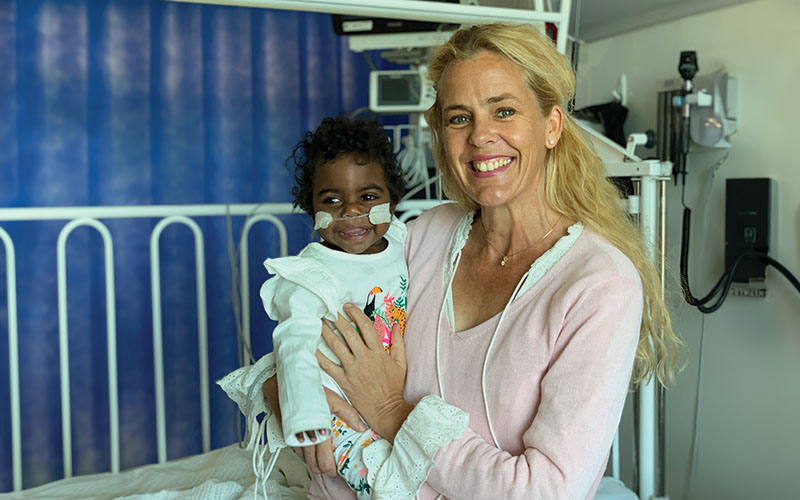
Culturally secure intervention to facilitate medical follow up for Aboriginal children, after being hospitalised with chest infections, have proven to improve long-term lung health outcomes.