
Search

Dr Amgarth-Duff is an early career Post-doctoral Senior Research Offer in the Healthy Skin & ARF prevention team.
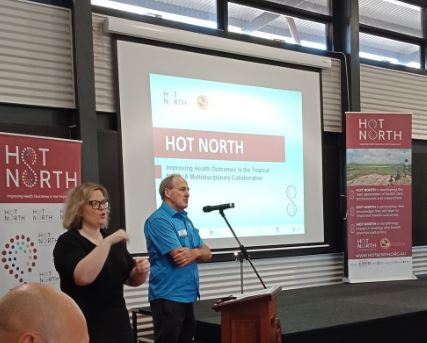
Over 100 researchers and health professionals from around Australia have united in Broome this week to address the major health battles facing people living in the tropical north of the country.
Controlled human infection (CHI) models can provide insights into transmission of pathogens such as Streptococcus pyogenes (Strep A). As part of the Controlled Human Infection with Penicillin for Streptococcus pyogenes (CHIPS) trial, we explored the potential for transmission among participants deliberately infected with the Strep A emm75 strain.
Since 1955, the recommended strategy for rheumatic heart disease secondary prophylaxis has been benzathine penicillin G injections administered intramuscularly every 4 weeks. Due to dosing frequency, pain, and programmatic challenges, adherence is suboptimal. It has previously been demonstrated that BPG delivered subcutaneously at a standard dose is safe and tolerable and has favorable pharmacokinetics, setting the scene for improved regimens with less frequent administration.
The structure and function of infant skin is not fully developed until 34 weeks of gestation, and this immaturity is associated with risk of late-onset sepsis (LOS). Topical coconut oil improves preterm-infant skin integrity and may reduce LOS. However, data on early-life skin-microbiome succession and potential effects of emollient skin care in preterm infants are scarce.
The eradication of smallpox is considered one of the greatest achievements of humankind, thanks to vaccination. The widespread availability of childhood vaccines has substantially reduced childhood morbidity and mortality. Devastating infections, such as polio, have almost disappeared due to vaccination. In 2021, it was estimated that vaccination against ten selected pathogens will have averted 69 million deaths between 2000 and 2030. Increases in vaccine coverage and introduction of additional vaccines should reduce lifetime mortality by 72% in the 2019 birth cohort. However, access to vaccines that prevent life-threatening and disabling infectious diseases remains unequal.
Streptoccocal A (Strep A, GAS) infections in Australia are responsible for significant morbidity and mortality through both invasive (iGAS) and post-streptococcal (postGAS) diseases as well as preceding superficial (sGAS) skin and throat infection. The burden of iGAS and postGAS are addressed in some jurisdictions by mandatory notification systems; in contrast, the burden of preceding sGAS has no reporting structure, and is less well defined.
Rheumatic heart disease (RHD) is the most common form of acquired heart disease worldwide. In RHD, volume loading from mitral regurgitation leads to left ventricular (LV) dilatation, increased wall stress, and ultimately LV dysfunction. Improved understanding of LV dynamics may contribute to refined timing of intervention.
Convalscent plasma (CP) was identified as a potential therapy for COVID-19 available early in the pandemic.
Integrating First Nations knowledge systems and Western research methodologies recognizes the strength, experience, and insight of First Nations peoples in addressing health issues in their communities. In research, this includes projects being led by First Nations Elders and peoples, including First Nations researchers in the team, and collecting data in ways that reflect First Nations ways of knowing, being, and doing.