
Search

Researchers exploring the potential health benefits of pets have found children who regularly walk and play with a family dog are more active, have less screen time, and sleep more.
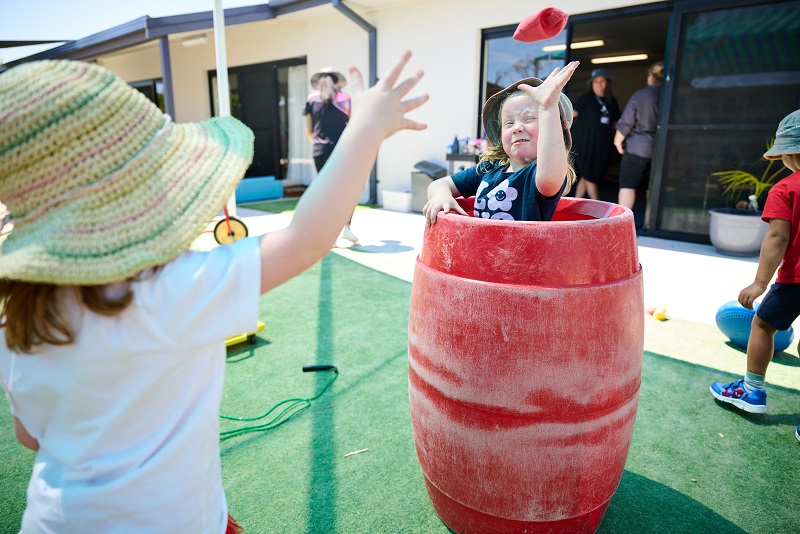
Our Child Physical Activity, Health and Development team focuses on improving children’s physical activity levels, health and development. We work to uncover the best environments, policies and programs to facilitate physically active lifestyles for lifelong health and wellbeing.
This study investigated where preschool children were more or less active in outdoor play areas in Early Childhood Education and Care (ECEC) centers using a novel method of combined device-measured physical activity, spatial data and on-site audit data.
24-hour Movement Guidelines for the Early Years promote that achieving all three-movement behaviour (sleep, sedentary behaviour and physical activity) recommendations is important for child health and development. We examined the association between meeting all, none and combinations of the Australian 24-Hour Movement Guidelines for the Early Years and social-emotional development in 1363 preschool (2-5 years) boys (52%) and girls.
We explored childcare educators’ perceived barriers and facilitators to policy implementation in order to inform the development and implementation of an early childhood education and care (ECEC) specific physical activity policy. This study was part of the Play Active (2019-2023) project which aimed to develop, implement and evaluate evidence-based physical activity policy to improve physical activity levels in children attending ECEC.
This study investigated whether the timing of birth of the younger siblings was associated with the risk of the older siblings’ developmental vulnerability in early childhood.
To investigate the correlates of adolescent energy drink use using a socioecological approach to inform future interventions.
To test the internal validity of the test-negative design (TND) by investigating associations between maternal influenza vaccination, and new virus detection episodes (VDEs), acute respiratory illness, and healthcare visits in their children.
Daily physical activity is critical during the early years of life for facilitating children's health and development. A large proportion of preschool children do not achieve the recommended 3 h of daily physical activity. Early childhood education and care (ECEC) services are a key setting to intervene to increase physical activity. There is a significant need for ECEC specific physical activity policy, including clearer guidelines on the amount of physical activity children should do during care, and strategies for implementation of these guidelines.
The environmental influences on early childhood development are understudied. The association between vegetation cover (i.e., trees, shrubs, grassed areas) in four key behaviour settings and socioemotional functioning was investigated in 1196 young children (2–5 years).