Skip to content
The Kids Research Institute Australia logo
Donate

No results yet

Search

Research

Viewpoints on what is important to maintain relationship satisfaction in couples raising a child with autism spectrum disorder

Couples should be supported to strengthen communication processes and work in partnership to raise their child with ASD through family-centred interventions

Research

The misnomer of ‘high functioning autism’: Intelligence is an imprecise predictor of functional abilities at diagnosis

We argue that 'high functioning autism' is an inaccurate clinical descriptor when based solely on intelligence quotient demarcations

Research

Application of Population-Based Linked Data to the Study of Intellectual Disability and Autism

Data linkage is the bringing together of specific datasets from different sources using demographic information on individuals within a population.

Research

Perinatal testosterone exposure and autistic-like traits in the general population: a longitudinal pregnancy-cohort study

Increased prenatal testosterone exposure has been hypothesized as a mechanism underlying autism spectrum disorders (ASD).

Research

To Feel Belonged: The Voices of Children and Youth with Disabilities on the Meaning of Wellbeing

The aim of this paper was to describe the meaning of wellbeing for children and youth with disabilities from their perspective.

News & Events

World-first Inklings Program launches in South Australia

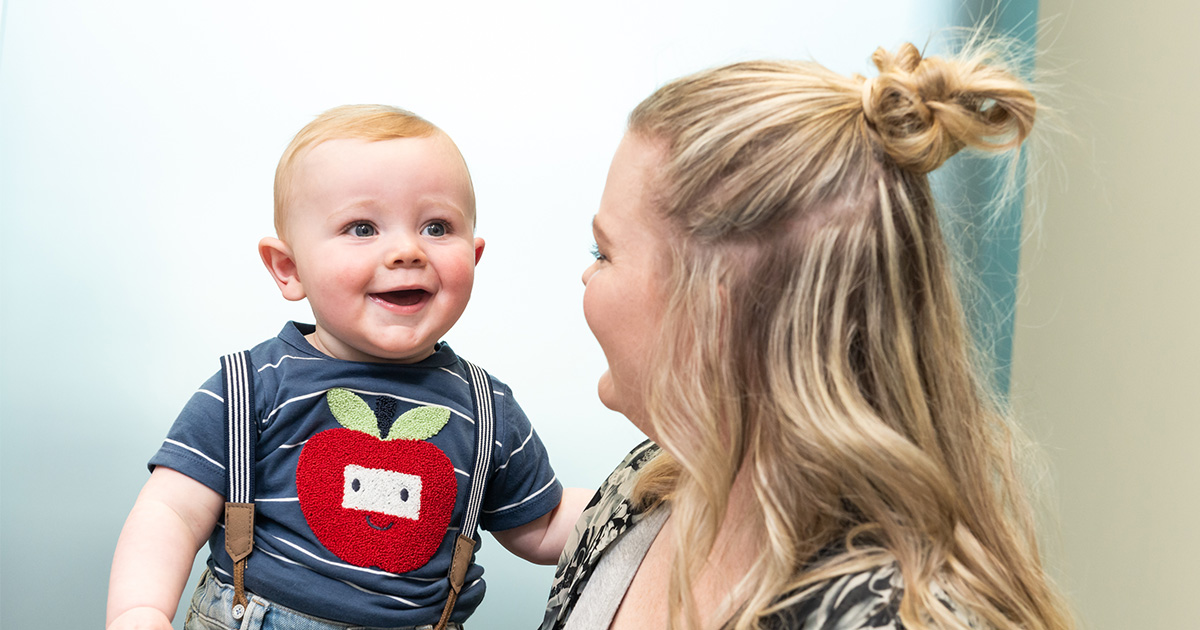
South Australian families with babies showing early social and communication differences will be among the first to benefit from a nation-leading early support program, as The Kids Research Institute Australia’s Inklings Program officially launches in South Australia.
Research

Caregiver-Mediated Early Support Program Delivered Online Versus Care-as-Usual for Infants at Elevated Familial Likelihood for Autism

LiL' STEPS (Language development & Intervention Lab's SupporTing Early social-communication and language by Promoting caregiver Sensitive responsiveness) is a novel, manualized, caregiver-mediated early support program developed in India and delivered online for infants at elevated familial likelihood for autism. The program has been found to be feasible and acceptable. The preliminary efficacy of the LiL' STEPS program, which remains to be evaluated, was assessed in this study using a feasibility randomized controlled trial design. 

Research

The valence-specific empathy imbalance hypothesis of autism: The role of autistic traits, alexithymia, emotion dysregulation, and gender differences

Individuals exhibiting pronounced autistic traits (e.g., social differences and specialised interests) may struggle with cognitive empathy (i.e., the ability to infer others' emotions), although the relationship with affective empathy (i.e., the ability to share others' emotions) is less clear in that higher levels of autistic traits may be linked with increased affective empathy for negative emotions but reduced affective empathy for positive emotions. The current study investigates this empathy profile and whether alexithymia and emotion dysregulation help to explain it.

Research

Support Preferences and Clinical Decision Support Systems (CDSS) in the Clinical Care of Autistic Children: Stakeholder Perspectives

Clinical decision support systems (CDSS) are increasingly utilised within healthcare settings to enhance decision making. However, few studies have investigated their application in the context of clinical services for autistic people, with no research to date exploring the perspectives of the key stakeholders who are, or in the future may be, impacted by their use.

Research

Utilising Behavioural and Sensory Profiles and Associated Perinatal Factors to Identify Meaningful Subgroups in Autism Spectrum Disorder

The heterogeneity of autism spectrum disorder clinically and aetiologically hinders intervention matching and prediction of outcomes. This study investigated if the behavioural, sensory, and perinatal factor profiles of autistic children could be used to identify distinct subgroups. Participants on the autism spectrum aged 2 to 17 years and their families were sourced via the Australian Autism Biobank.