
Search
Anthony Kicic BSc (Hons) PhD Head, Airway Epithelial Research; WA Cystic Fibrosis Research Collaborative Program Fellowship; Stan Perron Charitable
Previous research has shown that immune development during the first week of life, i.e. ontogeny, is progressive, consistent and robust, involving large numbers of differentially expressed genes at each sampled time point.

An exciting study is investigating whether a new therapeutic treatment for asthma will protect young sufferers from ongoing lung damage and improve their long-term health outcomes.
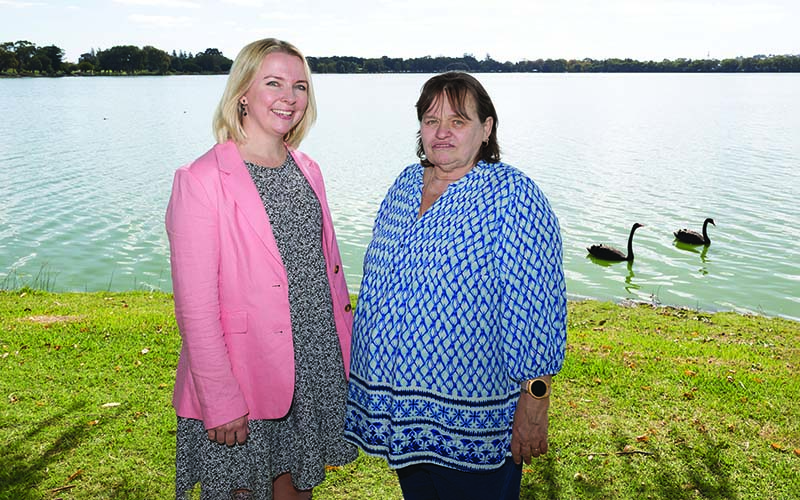
In Aboriginal culture, water is life, holding powerful spiritual and cultural significance and acting as a vital source of connection, food and medicine.
To better characterise prematurity-associated lung disease, adult spirometry phenotype classifications (obstructive lung disease, preserved ratio impaired spirometry and dysanapsis) have been applied to children born preterm. It is unknown how these phenotypes track over time.
Functional studies of how early-life interventions shape the airway microbiome remain scarce. Here, we performed metagenomic sequencing of 704 longitudinal nasal swabs from infants with and without cystic fibrosis (CF) to construct and characterize a non-redundant gene atlas of the infant nasal microbiome. We aimed to determine how the nasal microbiome is perturbed by early therapies, as CF is commonly treated with inhaled hypertonic saline to improve mucociliary clearance.
National policies are essential for countries to adapt to the negative health impacts of climate change. Children are disproportionately affected by these impacts and must be at the heart of adaptation policies to address their vulnerabilities. Adaptation commitments worldwide are integrated into national adaptation plans, nationally determined contributions, national communications, and other multisectoral policies. We aimed to evaluate how effectively national climate change policies worldwide plan to protect child health, considering a range of determinants for successful child-health adaptation.
The high burden of peanut allergy underscores the need for treatment options that improve patient health-related quality of life (HRQL). However, the modifying effect of sex assigned at birth on treatment-related outcomes remains poorly understood. We sought to investigate whether sex modifies treatment effect on the change in overall and subdomain HRQL during the PPOIT-003 trial.
Early childhood wheeze is a major risk factor for asthma. However, not all children who wheeze will develop the disease. The airway epithelium has been shown to be involved in asthma pathogenesis. Despite this, the airway epithelium of children with acute wheeze remains poorly characterized.
Understanding of newborn immune ontogeny in the first week of life will enable age-appropriate strategies for safeguarding vulnerable newborns against infectious diseases. Here we conducted an observational study exploring the immunological profile of infants longitudinally throughout their first week of life.