
Search
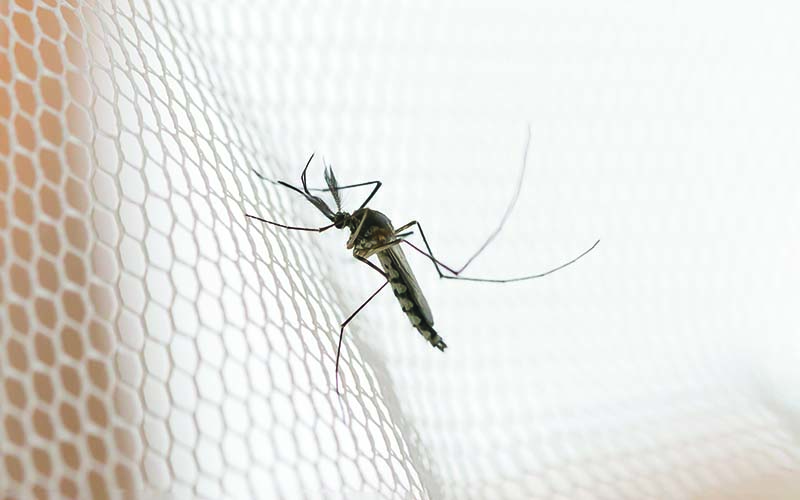
Global efforts led by The Kids Research Institute Australia’s Child Health Analytics program will see nations impacted by high rates of malaria empowered to develop their own controls and solutions.
Namibia, a low malaria transmission country targeting elimination, has made substantial progress in reducing malaria burden through improved case management, widespread indoor residual spraying and distribution of insecticidal nets. The country's diverse landscape includes regions with varying population densities and geographical niches, with the north of the country prone to periodic outbreaks.
Climatic conditions are a key determinant of malaria transmission intensity, through their impacts on both the parasite and its mosquito vectors. Mathematical models relating climatic conditions to malaria transmission can be used to develop spatial maps of climatic suitability for malaria. These maps underpin efforts to quantify the distribution and burden of malaria in humans, enabling improved monitoring and control.
In recent decades, field and semi-field studies of malaria transmission have gathered geographic-specific information about mosquito ecology, behaviour and their sensitivity to interventions. Mathematical models of malaria transmission can incorporate such data to infer the likely impact of vector control interventions and hence guide malaria control strategies in various geographies.
The clinical development of novel vaccines, injectable therapeutics, and oral chemoprevention drugs has the potential to deliver significant advancements in the prevention of Plasmodium falciparum malaria. These innovations could support regions in accelerating malaria control, transforming existing intervention packages by supplementing interventions with imperfect effectiveness or offering an entirely new tool.
Melissa Penny PhD, PD, BSc (Hons) Professor Fiona Stanley Chair in Child Health Research melissa.penny@thekids.org.au Professor Fiona Stanley Chair
Knowing when and where infected mosquitoes bite is required for estimating accurate measures of malaria risk, assessing outdoor exposure, and designing intervention strategies. This study combines secondary analyses of a human behaviour survey and an entomological survey carried out in the same area to estimate human exposure to malaria-infected Anopheles mosquitoes throughout the night in rural villages in south-eastern Tanzania.
Malaria incidence (MI) has significantly declined in Nepal, and this study aimed to investigate the spatiotemporal distribution and drivers of MI at the ward level. Data for malaria cases were obtained from the National Surveillance System from 2013 to 2021. Data for covariates, including annual mean temperature, annual mean precipitation, and distance to the nearest city, were obtained from publicly available sources. A Bayesian spatial model was used to identify factors associated with the spatial distribution of MI.
Malaria risk maps are crucial for controlling and eliminating malaria by identifying areas of varying transmission risk. In the Greater Mekong Subregion, these maps guide interventions and resource allocation. This article focuses on analysing changes in malaria transmission and developing fine-scale risk maps using five years of routine surveillance data in Laos (2017-2021). The study employed data from 1160 geolocated health facilities in Laos, along with high-resolution environmental data.
The rising burden of mosquito-borne diseases in Europe extends beyond urban areas, encompassing rural and semi-urban regions near managed and natural wetlands evidenced by recent outbreaks of Usutu and West Nile viruses. While wetland management policies focus on biodiversity and ecosystem services, few studies explore the impact on mosquito vectors.